
MODEL UNITED NATIONS
Expanding Perspectives & Creating New Connections
Conference info
Background guides
Submit your papers
Helpful docs and links
Code of conduct
MODEL UN
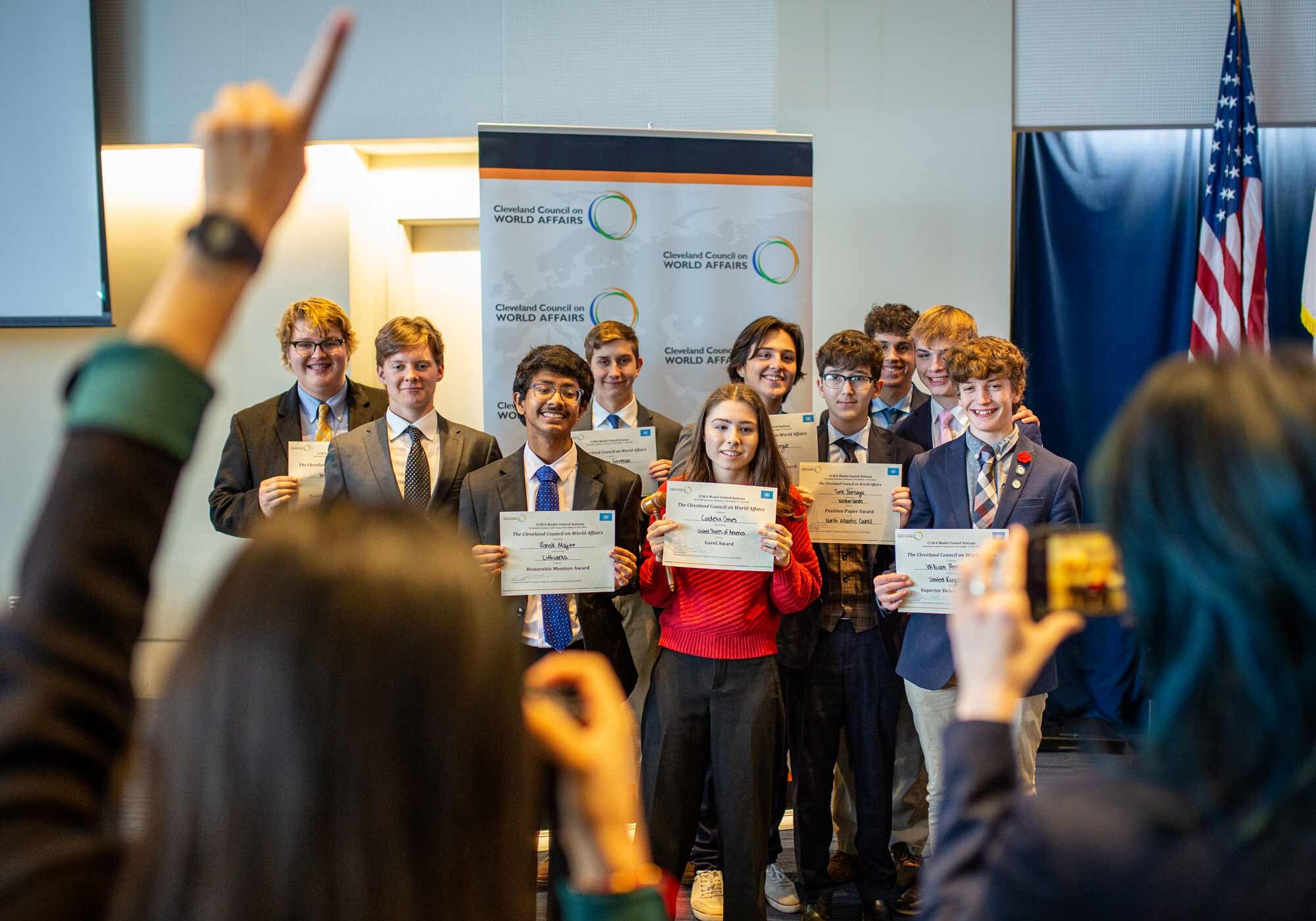
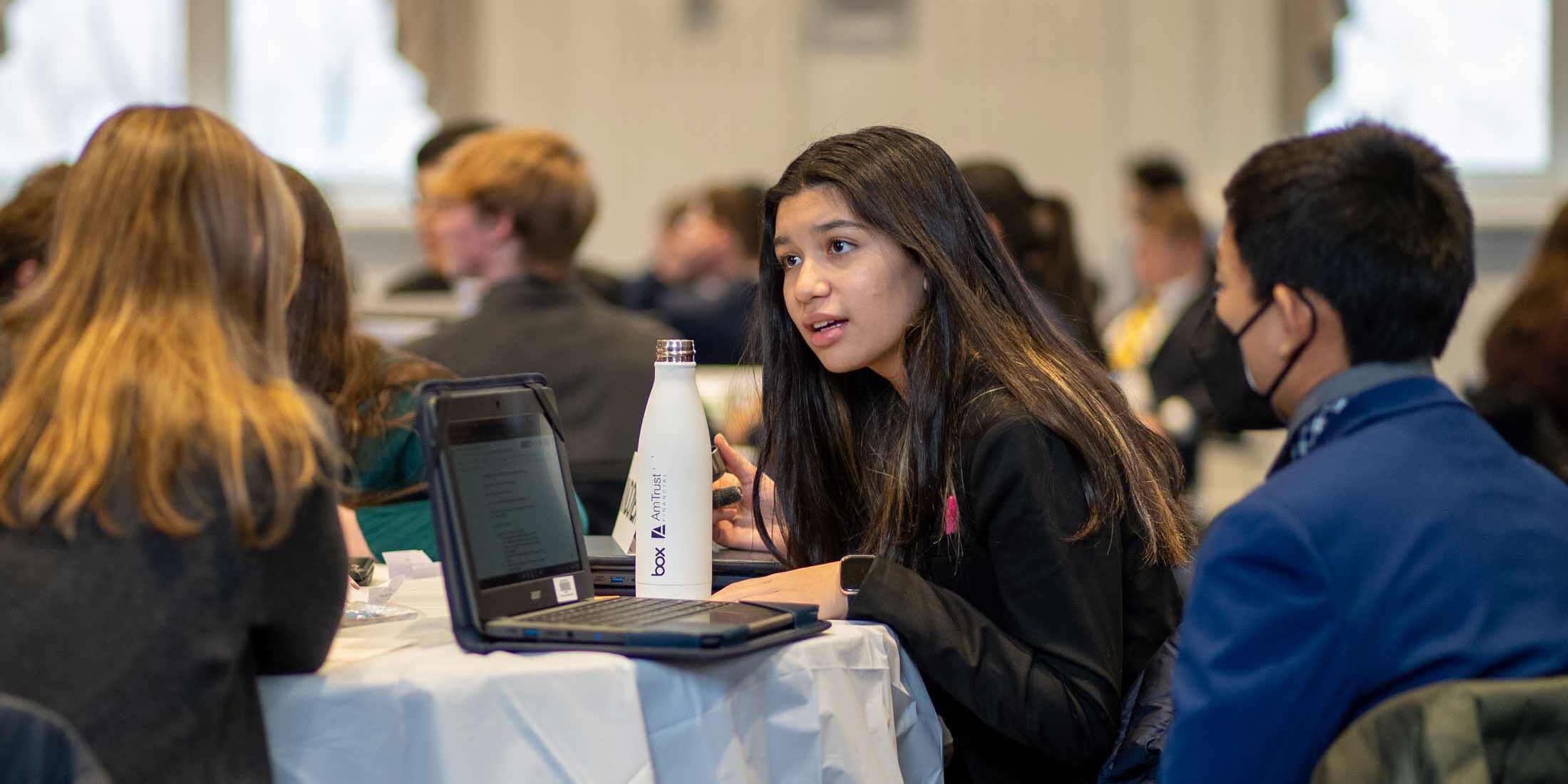
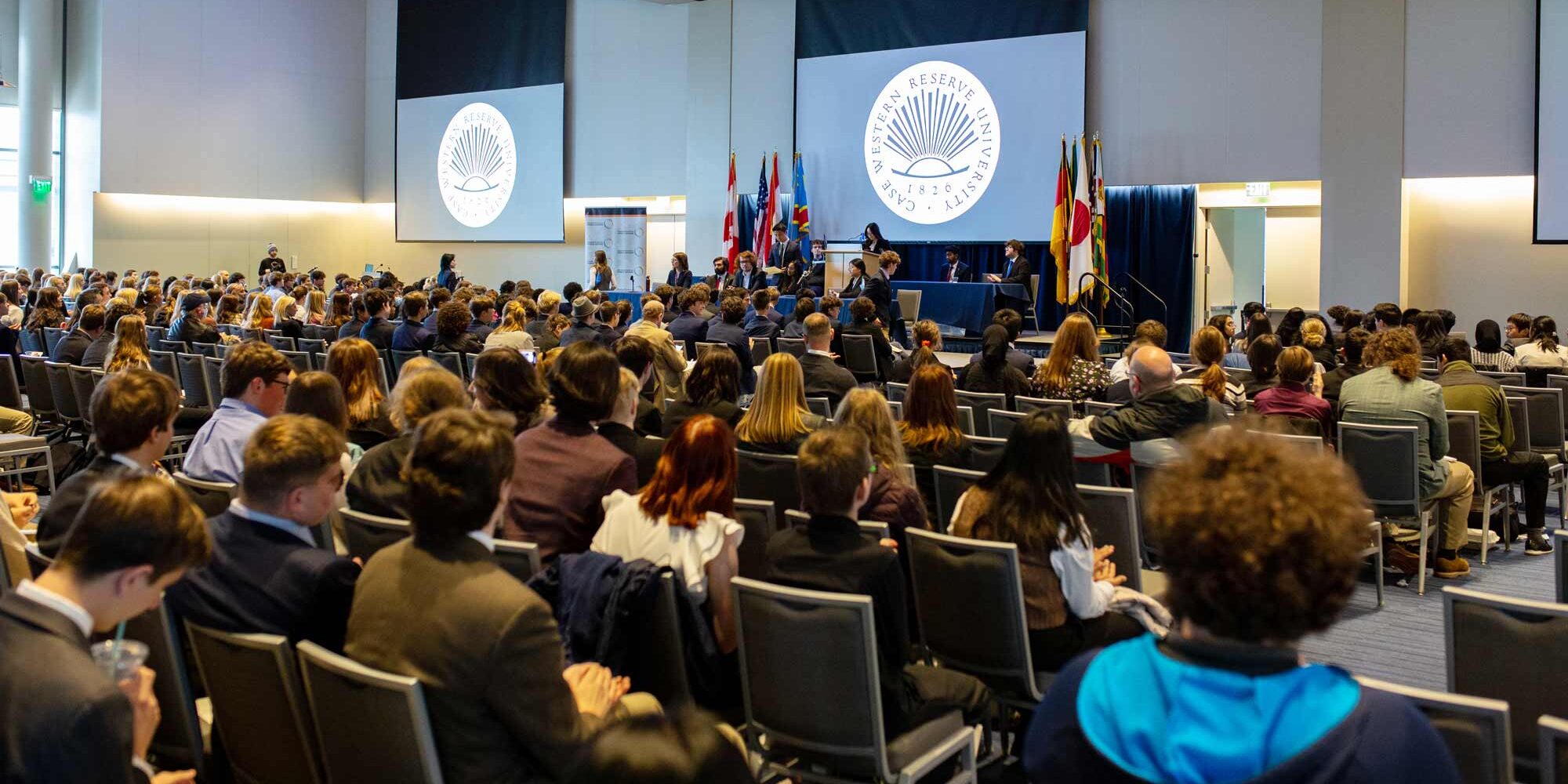
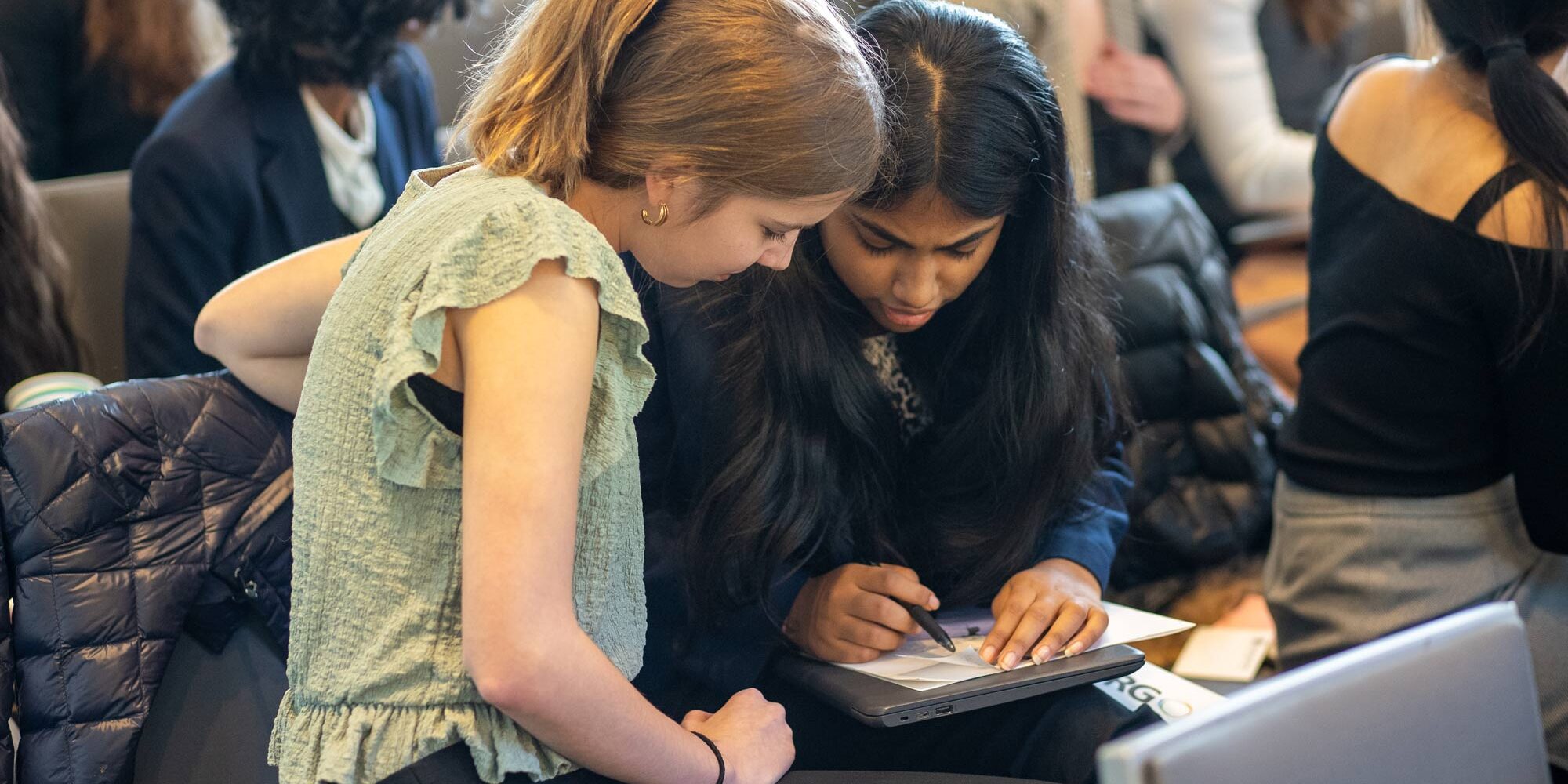
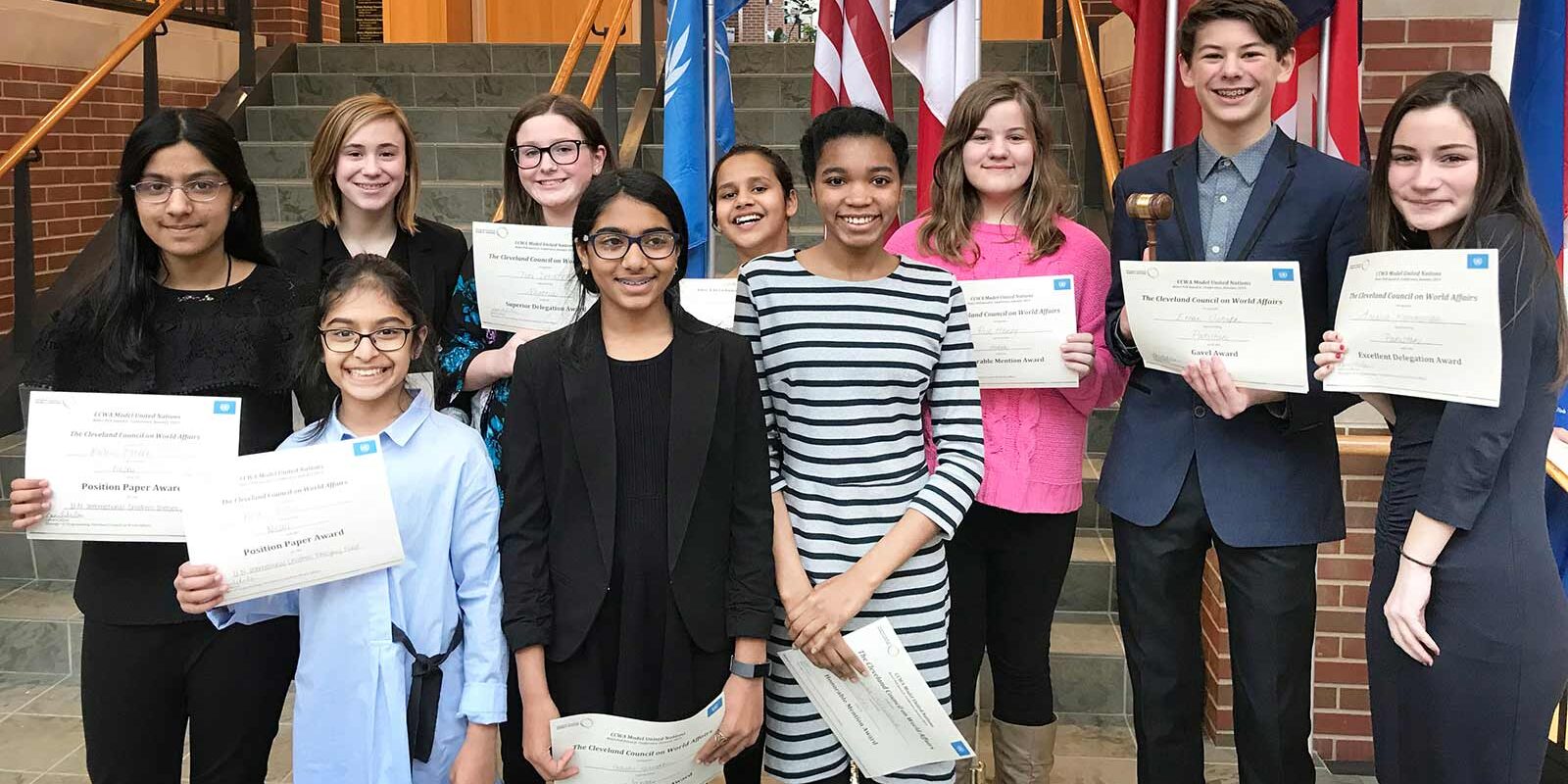
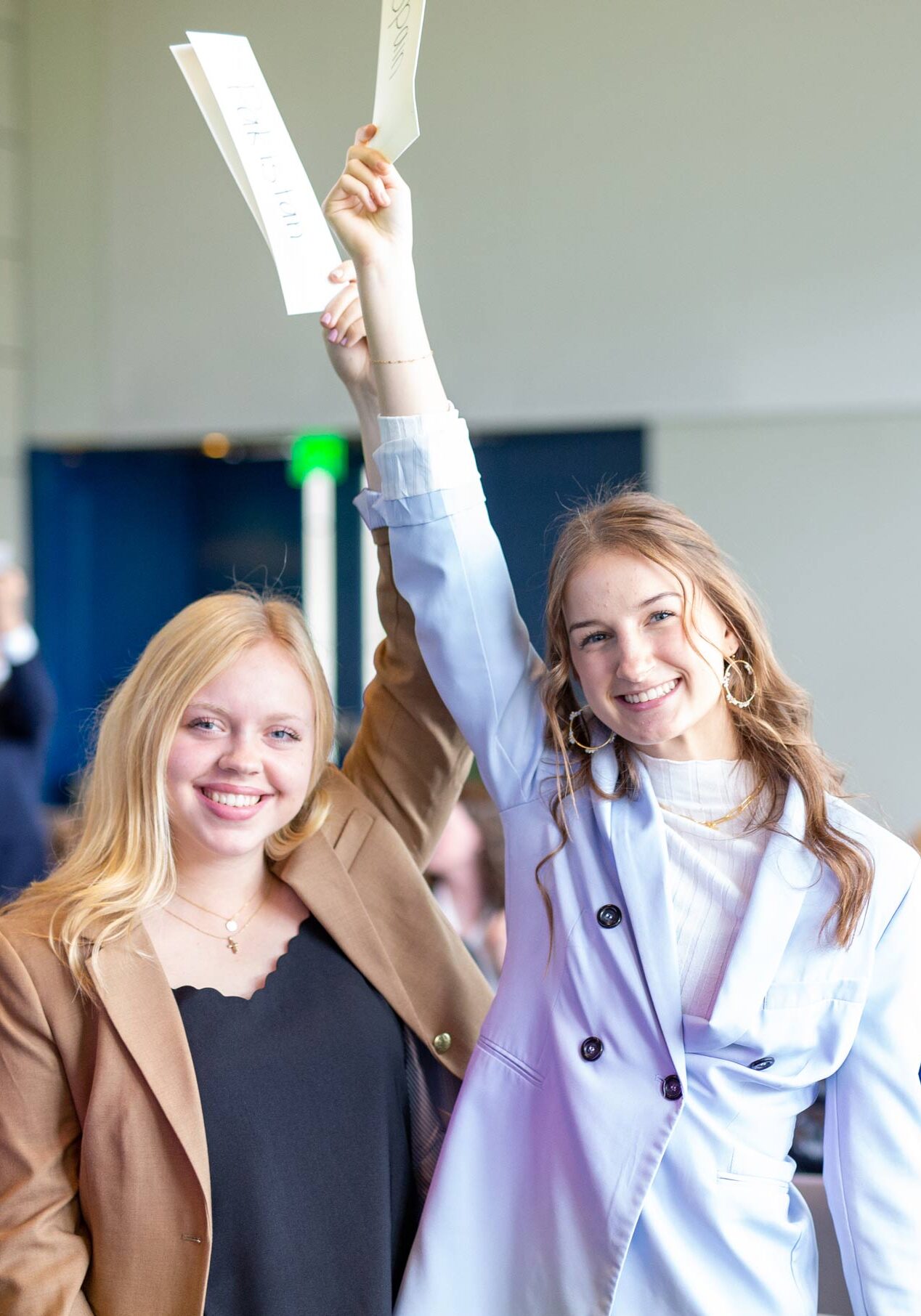
Model UN is a unique, interactive program that brings world affairs to life for high school and middle school students. Through participation in Model UN simulations, students achieve global learning objectives. They are empowered to investigate the world, recognize different perspectives, communicate ideas to diverse audiences, and apply what they learn creatively during research, debate, and conference time. CCWA has organized Model UN conferences for area students since 1941, offering students the opportunity to learn about and engage in international affairs in a personal, exciting way.
CCWA hosts three high school conferences and two middle school conferences each year. CCWA staff carefully selects committees to focus on for every school year at our conferences. Whether you are new to Model UN or a veteran of the program, CCWA staff-led workshops are a great way to refresh your memory of parliamentary procedures and research skills. CCWA also offers a wide range of resources for teacher advisors and student delegates alike. Our staff is always available to answer questions, provide resources, and conduct trainings.
“
”
CCWA’s Model UN program has had a major impact on both my students and me throughout the years. The conferences are incredibly well-run, and give our students the opportunity to interact with other local students in a unique way that builds their speaking and diplomacy skills. We look forward to CCWA Model UN conferences each year.
Kirsten Rosebrock-Hayes
Model UN teacher at Laurel School
Schedule & Registration
PLAN & REGISTER FOR CONFERENCES
Please note that CCWA's Model UN registration process is first-come, first-served, meaning that spots are limited and our conferences often reach capacity quickly. To ensure your delegation can attend, it is best to register as early as possible to secure your spot. Your registration is confirmed only when a CCWA representative follows up with your assignments. If a conference reaches its capacity, you may be placed on a waitlist and could be accepted if any other delegations cancel.
Autumn Model United Nations Conference
November 11-12, 2025 at Case Western Reserve University
- Best Small Delegation: St. Vincent-St. Mary High School
- Best Large Delegation: Solon High School
Lorain Model United Nations Conference
December 10-11, 2025 at Lorain County Community College
- This conference is at capacity. Please contact munsupport@ccwa.org to join the waitlist.
- Payment, position papers, and liability forms are due November 25 at 4:00PM.
- Committees and topics for this conference can be found here.
- Matrix available here.
Middle School Winter Model United Nations Conference
January 7-8, 2026 at John Carroll University
- This conference is now open. To register, click here.
- Payment, position papers, and liability forms are due December 17 at 4:00PM.
- Committees and topics for this conference can be found here.
- Matrix available here.
Spring Model United Nations Conference
February 19-20, 2026 at Case Western Reserve University
- Registration will open here on December 15 at 12:00PM.
- Payment, position papers, and liability forms are due February 4 at 4:00PM.
- Committees and topics for this conference can be found here.
- Matrix available here.
Middle School Spring Model United Nations Conference
April 16-17, 2026 at Paradigm in Mentor
OPENING DAY OF THE CONFERENCE
- 8:00-8:30 Registration
- 8:30-8:45 Opening Ceremony
- 8:45-11:00 Committee Session I
- 11:00-11:30 Lunch Break
- 11:30-1:15 Committee Session II
CLOSING DAY OF THE CONFERENCE
- 8:30-10:30 Committee Session III
- 10:30-10:45 Break
- 10:45-12:15 Committee Session IV
- 12:15-12:45 Lunch Break
- 12:45-1:15 Closing Ceremony
OPENING DAY OF THE CONFERENCE
- 8:30-9:00 Registration
- 9:00-9:15 Opening Ceremony
- 9:15-11:15 Committee Session I
- 11:15-11:45 Lunch Break
- 11:45-1:15 Committee Session II
CLOSING DAY OF THE CONFERENCE
- 9:00-10:30 Committee Session III
- 10:30-10:45 Break
- 10:45-12:15 Committee Session IV
- 12:15-12:45 Lunch Break
- 12:45-1:15 Closing Ceremony
Registration cost for 2025-2026 is $50/delegate for private schools and $40/delegate for public schools. Kindly note that these conference registration costs are being partially subsidized through foundation support for all students participating in CCWA’s Model UN program. There is additional foundation support dedicated to further reducing registration rates for public school students. Payment must be made at least 10 business days prior to the conference start date.
Committees & Topics
The following committees will be offered at our 2025-2026 conferences. Please click the conference below to find which committees will be offered at that conference.
COMMITTEES (EXPAND TO VIEW TOPICS)
Our Autumn High School Conference committees and topics are listed below:
UN Environmental Programme (UNEP). This will be a Double Delegation committee.
Topic A: Critical Minerals: Clean Energy Transitions
Topic B: Global Waste Management
UNEP Background Guide is available here.
World Health Organization (WHO). This will be a Double Delegation committee.
Topic A: Global Disease Preparedness and Response
Topic B: Antimicrobial Drug Resistance
WHO Background Guide is available here.
International Atomic Energy Agency (IAEA). This will be a Double Delegation committee.
Topic A: Expanding access to nuclear medicine and radiotherapy in low and middle-income countries
Topic B: Preventing Nuclear Terrorism
IAEA Background Guide is available here.
UN Office for Outer Space Affairs (UNOOSA). This will be a Double Delegation committee.
Topic A: Space Tourism and New Space Actors
Topic B: Space Debris Mitigation and Removal
UNOOSA Background Guide is available here.
UN Economic and Social Council (ECOSOC). This will be a Single Delegation committee.
Topic A: Implementation of the Smart Cities Programme
Topic B: Protection of Child and Youth Migrants and Refugees
ECOSOC Background Guide is available here.
UN Commission on the Status of Women (CSW). This will be a Double Delegation committee.
Topic A: Technology, Surveillance, and Digital Rights
Topic B: Labor, Inequality, and Economic Power
CSW Background Guide is available here.
Security Council (UNSC). This will be a Single Delegation committee.
Topic A: Transitional Justice: National Reconciliation and Accountability
Topic B: Threats to International Peace and Security: Artificial Intelligence
UNSC Background Guide is available here.
Association of Southeast Asian Nations (ASEAN). This will be a Double Delegation committee.
Topic A: Situation in the South China Sea
Topic B: Evaluating Strategic Trade Partnerships
ASEAN Background Guide is available here.
*CRISIS COMMITTEE* Federation Internationale de Football Association (FIFA). This will be a Single Delegation committee.
FIFA Background Guide is available here.
*Please note that crisis committees function differently than standard committee rooms and it is highly suggested for more experienced delegates.
Our Lorain High School Conference committees and topics are listed below:
UN Environmental Programme (UNEP). This will be a Double Delegation committee.
Topic A: Critical Minerals: Clean Energy Transitions
Topic B: Global Waste Management
UNEP Background Guide is available here.
World Health Organization (WHO). This will be a Double Delegation committee.
Topic A: Global Disease Preparedness and Response
Topic B: Antimicrobial Drug Resistance
WHO Background Guide is available here.
International Atomic Energy Agency (IAEA). This will be a Single Delegation committee.
Topic A: Expanding access to nuclear medicine and radiotherapy in low and middle-income countries
Topic B: Preventing Nuclear Terrorism
IAEA Background Guide is available here.
UN Office for Outer Space Affairs (UNOOSA). This will be a Double Delegation committee.
Topic A: Space Tourism and New Space Actors
Topic B: Space Debris Mitigation and Removal
UNOOSA Background Guide is available here.
UN Economic and Social Council (ECOSOC). This will be a Double Delegation committee.
Topic A: Implementation of the Smart Cities Programme
Topic B: Protection of Child and Youth Migrants and Refugees
ECOSOC Background Guide is available here.
UN Commission on the Status of Women (CSW). This will be a Double Delegation committee.
Topic A: Technology, Surveillance, and Digital Rights
Topic B: Labor, Inequality, and Economic Power
CSW Background Guide is available here.
Security Council (UNSC). This will be a Single Delegation committee.
Topic A: Transitional Justice: National Reconciliation and Accountability
Topic B: Threats to International Peace and Security: Artificial Intelligence
UNSC Background Guide is available here.
Our Middle School Winter Conference committees and topics are listed below:
UN Environmental Programme (UNEP). This will be a Double Delegation committee.
Topic A: Critical Minerals: Clean Energy Transitions
Topic B: Global Waste Management
UNEP Background Guide is available here.
World Health Organization (WHO). This will be a Double Delegation committee.
Topic A: Global Disease Preparedness and Response
Topic B: Antimicrobial Drug Resistance
WHO Background Guide is available here.
International Atomic Energy Agency (IAEA). This will be a Double Delegation committee.
Topic A: Expanding access to nuclear medicine and radiotherapy in low and middle-income countries
Topic B: Preventing Nuclear Terrorism
IAEA Background Guide is available here.
UN Office for Outer Space Affairs (UNOOSA). This will be a Double Delegation committee.
Topic A: Space Tourism and New Space Actors
Topic B: Space Debris Mitigation and Removal
UNOOSA Background Guide is available here.
UN Economic and Social Council (ECOSOC). This will be a Double Delegation committee.
Topic A: Implementation of the Smart Cities Programme
Topic B: Protection of Child and Youth Migrants and Refugees
ECOSOC Background Guide is available here.
UN Commission on the Status of Women (CSW). This will be a Double Delegation committee.
Topic A: Technology, Surveillance, and Digital Rights
Topic B: Labor, Inequality, and Economic Power
CSW Background Guide is available here.
Security Council (UNSC). This will be a Double Delegation committee.
Topic A: Transitional Justice: National Reconciliation and Accountability
Topic B: Threats to International Peace and Security: Artificial Intelligence
UNSC Background Guide is available here.
Our Spring High School Conference committees and topics are listed below:
UN Environmental Programme (UNEP). This will be a Double Delegation committee.
Topic A: Critical Minerals: Clean Energy Transitions
Topic B: Global Waste Management
UNEP Background Guide is available here.
World Health Organization (WHO). This will be a Double Delegation committee.
Topic A: Global Disease Preparedness and Response
Topic B: Antimicrobial Drug Resistance
WHO Background Guide is available here.
International Atomic Energy Agency (IAEA). This will be a Single Delegation committee.
Topic A: Expanding access to nuclear medicine and radiotherapy in low and middle-income countries
Topic B: Preventing Nuclear Terrorism
IAEA Background Guide is available here.
UN Office for Outer Space Affairs (UNOOSA). This will be a Double Delegation committee.
Topic A: Space Tourism and New Space Actors
Topic B: Space Debris Mitigation and Removal
UNOOSA Background Guide is available here.
UN Economic and Social Council (ECOSOC). This will be a Double Delegation committee.
Topic A: Implementation of the Smart Cities Programme
Topic B: Protection of Child and Youth Migrants and Refugees
ECOSOC Background Guide is available here.
UN Commission on the Status of Women (CSW). This will be a Double Delegation committee.
Topic A: Technology, Surveillance, and Digital Rights
Topic B: Labor, Inequality, and Economic Power
CSW Background Guide is available here.
Security Council (UNSC). This will be a Double Delegation committee.
Topic A: Transitional Justice: National Reconciliation and Accountability
Topic B: Threats to International Peace and Security: Artificial Intelligence
UNSC Background Guide is available here.
*CRISIS COMMITTEE* Crisis Committee is TO BE ANNOUNCED. These will be a Single Delegation committee and a no technology committee.
*Please note that crisis committees function differently than standard committee rooms and it is highly suggested for more experienced delegates.
Our Middle School Spring Conference committees and topics are listed below:
UN Environmental Programme (UNEP). This will be a Double Delegation committee.
Topic A: Critical Minerals: Clean Energy Transitions
Topic B: Global Waste Management
UNEP Background Guide is available here.
World Health Organization (WHO). This will be a Double Delegation committee.
Topic A: Global Disease Preparedness and Response
Topic B: Antimicrobial Drug Resistance
WHO Background Guide is available here.
International Atomic Energy Agency (IAEA). This will be a Double Delegation committee.
Topic A: Expanding access to nuclear medicine and radiotherapy in low and middle-income countries
Topic B: Preventing Nuclear Terrorism
IAEA Background Guide is available here.
UN Economic and Social Council (ECOSOC). This will be a Single Delegation committee.
Topic A: Implementation of the Smart Cities Programme
Topic B: Protection of Child and Youth Migrants and Refugees
ECOSOC Background Guide is available here.
Security Council (UNSC). This will be a Single Delegation committee.
Topic A: Transitional Justice: National Reconciliation and Accountability
Topic B: Threats to International Peace and Security: Artificial Intelligence
UNSC Background Guide is available here.
“
”
I love the Model UN program because I get to meet people who want to see change in the world and who value education, communication and action. I get to learn about prevalent issues and countries’ stances on them. Model UN makes me a better student, communicator and citizen.
Allison
Model UN Student
Position Papers
Position papers for each conference are due by 4:00 pm on the date listed under each conference.* Students that do not submit complete position papers by this deadline are still welcome to attend the conference, but will be ineligible for conference awards. Each delegation (regardless of the number of delegates) should submit one (1) position paper addressing every issue to be considered in the committee.
*This can vary based on weekends and holidays.
“
”
Model UN has enhanced my students’ public speaking abilities, increased their self-confidence and sharpened their writing skills. I believe Model UN has helped to open their eyes to new academic and professional opportunities. I am tremendously grateful for the opportunities that CCWA has provided to my students.
Margaret Reed
INSTRUCTOR, ARCHBISHOP HOBAN SCHOOL
Resources & Preparation
WORKSHOPS
We offer FREE in-school or virtual workshops for all participating schools. These can cover a variety of topics and are created individually to meet the needs of the team.
Whether you are new to Model UN or a veteran of the program, CCWA staff-led workshops are a great way to refresh your memory of parliamentary procedures and research skills. These workshops are free of charge and underwritten by generous foundation support. To set up a workshop, or for any questions, please contact us at munsupport@ccwa.org.
CCWA staff will lead interactive sessions and distribute materials for teachers and students on topics such as:
Topics for
TEACHERS
Starting and/or managing a Model UN team
Overview of parliamentary procedure and teaching techniques
Tips for preparing students to succeed
Topics for
STUDENTS
Research techniques
Overview and application of parliamentary procedure
Resolution writing how-to
Tips for debate and making alliances
BASICS & BEGINNERS
In preparation for a research session or conference, explore the guides and resources in the sections below:
Delegate Preparation Guide – Great place to start for any student or advisor new to MUN!
Advisor Registration Guide – How to register your team for the conferences
Model UN Glossary – Terms to know before the conference
Resolution Writing
Parliamentary Procedure:
Conference Structure: Overview of Parliamentary Procedure
Guide : How to Find UN Documents
United Nations Research page, Brookings Institution
United Nations Search By Topic, LegislateOnline
United Nations Member States “On the Record,” the official archives of the UN
When researching more specific issues, or looking into more recent developments in a country, news articles can be a valuable source of updated information. The following are examples of resources to utilize.
CIA World Factbook is an excellent resource to find basic information on your country’s economy, government, and demographics.
The Dakar Framework for Action, Education for All: Meeting our Collective Commitments outlines the educational goals that governments should be striving toward, with emphasis on education for girls.
FAOSTAT, offers a comprehensive database of international food and agricultural statistics.
The Consultative Group on International Agricultural Research, offers the latest in agricultural research that aims to reduce poverty and promote sustainable growth.
The UN Foundation’s “UN Wire,” which provides daily or weekly email digests of news stories relating to the UN and its work.
UNICEF’s flagship publication, The State of the World’s Children, (Data by country can be searched on this page)offers social statistics on many countries, with a special focus on the well-being of children.
World Bank deals in financials all over the world, and its website offers a wealth of economic and social data that can be searched by country or by particular statistic.
Policies & Code of Conduct
PRE-CONFERENCE ADVISOR CHECKLIST
Payment must be made 10 business days prior to the conference.
Reductions in the number of students attending the conference, or the withdrawal of a school from the conference must be made by 10 business days prior to the conference to be given a refund or adjusted payment amount. Full payment will be required for students or schools who withdraw after this time.
Advisers must submit a completed Student Roster Form 10 business days prior to the conference.
Every individual, including students and adults, who will be attending the conference must complete a Liability Release Form 10 business days prior to the conference. Individuals without a liability waiver on file will not be permitted to participate.
MODEL UN POLICIES
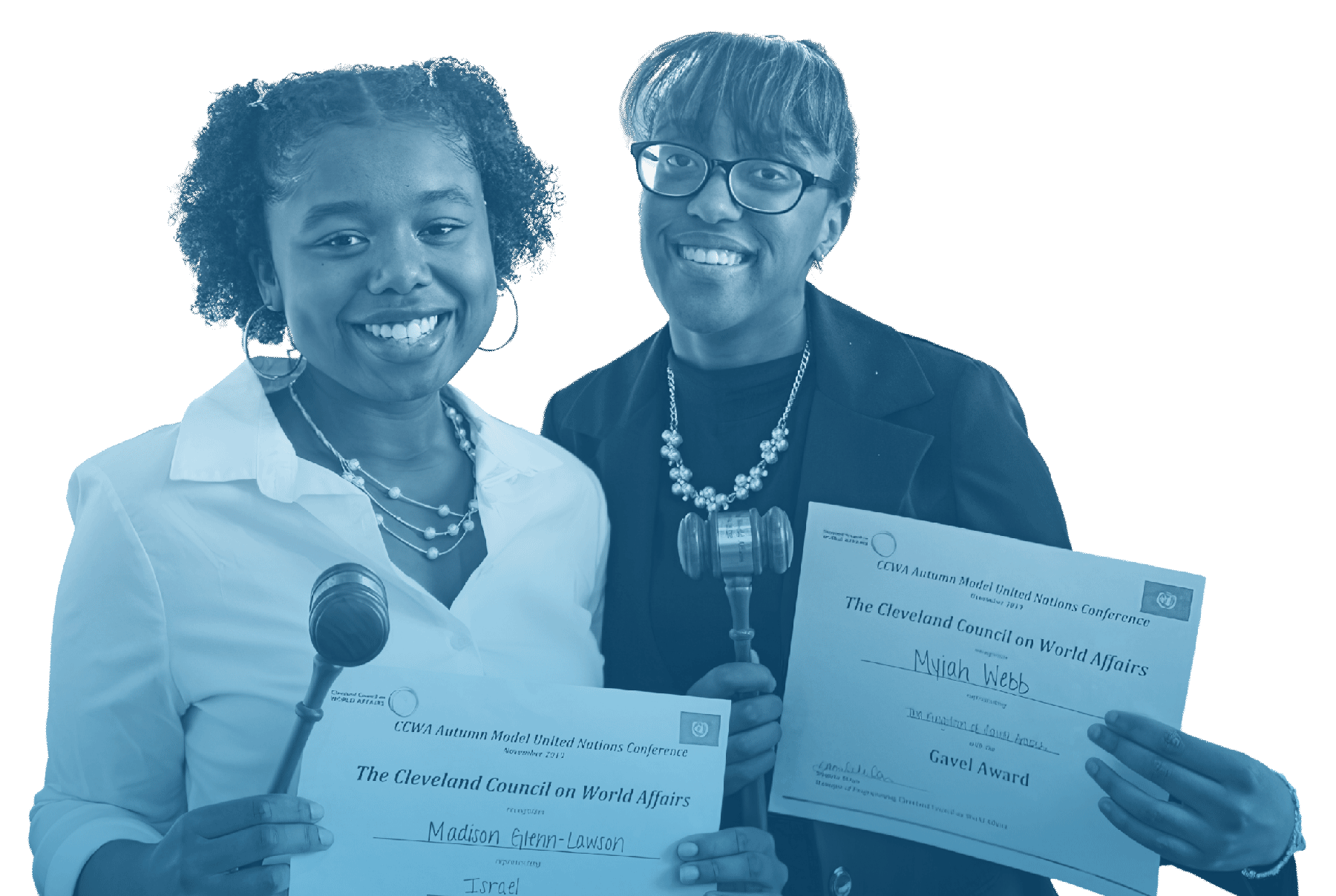
Students participating in a CCWA Model United National Conference are expected to maintain the highest caliber of professionalism and diplomatic behavior. They are expected to treat conference staff, venue staff, faculty advisors, visitors, and fellow delegates with respect and courtesy. Delegates must maintain professionalism in their speech, behavior, and appearance at all times. It is also expected that students are respectful of the property of our host facility. To participate, each delegate must also submit a signed copy of the Liability Release Form. Delegates who fail to adhere to these standards may be removed from the conference at the discretion of the conference leadership.
Faculty, advisors, and guests attending a CCWA Model United National Conference are encouraged to oversee, monitor and provide assistance to students serving in their committees. While advisors may not directly interfere with the business of the committee or participate in the negotiation or writing of resolutions, they should make efforts to encourage and protect the educational quality of the experience by providing helpful advice and clarification to their students. Faculty advisors and guests must adhere to the highest standards of professionalism and courtesy toward all conference staff, venue staff, faculty advisors, and students.
All delegates, conference staff, faculty advisors, and guests must adhere to professional clothing guidelines. Delegates whose attire is deemed to be inappropriate by conference staff may be removed from the committee for the remainder of the day.
Appropriate conference dress must conform to Western business attire. This will consist of slacks/skirt, dress shirt/blouse, and dress shoes. A business jacket or blazer is considered to be optional. Sweaters, jeans, t-shirts, shorts, hats, and sneakers are considered to be casual and inappropriate for the conference. Clothing that exposes excessive skin or undergarments is considered inappropriate.
The display of national symbols, flags, and pins of the country represented by the delegate is considered to be inappropriate. However, delegates are welcome to display United Nations symbols (such as the UN flag or gavel).
The use of traditional cultural dress is only permitted to students whose native country of origin includes traditional dress as professional business attire. CCWA Model UN staff will not tolerate any delegate who dresses in traditional cultural dress as a way to portray a character.
CCWA Model UN is committed to providing an educational conference environment that is free of unlawful discrimination. CCWA Model UN will not tolerate any instance of discrimination on the basis of race, religion, age, ancestry, national origin, gender identity, sexual orientation, or disability.
CCWA Model UN will not tolerate any instance of discrimination on the basis of race, religion, age, ancestry, national origin, gender identity, sexual orientation, or disability. CCWA Model UN will not tolerate any instances of harassment, sexual or otherwise, intentional or unintentional. The term “harassment” for all purposes includes, but is not limited to, offensive language, jokes, or other verbal, graphic, or physical conduct relating to the factors listed above.
If any delegate, guest, or staff member believes that they have been the subject of such discrimination or harassment, they must report the incident immediately to the conference director. The director and members of the staff of the Cleveland Council on World Affairs will alert the students’ faculty advisors and investigate the merits of the allegations by interviewing all involved parties. Based on the findings of the investigation, CCWA Model UN management may choose to take the following steps:
- Take no action,
- Issue a verbal warning or reprimand,
- Remove the offending individual(s) from the conference, or
- Any other action as deemed appropriate.
During the conference, delegates are permitted to use technology during committee sessions. Any usage of technology outside of conference purposes, as determined by conference staff, is deemed to be inappropriate.
If students are found to be using their computers or tablets for reasons other than those deemed appropriate by conference staff, students may first be issued a warning.
Position papers and resolutions used at the conference must be composed entirely of original work. Any act of plagiarism will not be tolerated by CCWA Model UN and may result in removal from the conference. The term “plagiarism” for all purposes includes, but is not limited to:
- the use of language and ideas presented by another individual without proper citation and credit,
- The use of another delegates’ draft language without their consent,
- The reuse of one’s own work and passing it off as new,
- The act of recycling position papers, working papers, and resolutions from previous conferences,
- And other instances of academic dishonesty.
While United Nations documents are within the public domain, CCWA Model UN does not permit their verbatim reuse.
Delegates may not work on resolutions outside of committee sessions, or engage in “pre-writing”. This includes any amount of editing or writing of the document before the start of the first committee session, during any breaks from committee (including lunch), and the time period between the close of committee session II, on day one, and the start of committee session III, on day two. Any delegates found to be editing or writing a resolution outside of committee sessions will be disqualified from awards. If a delegation is accused of this, the conference director will be notified and will investigate the merits of the allegations by interviewing all involved parties.
Delegations that accuse others of pre-writing or working on a resolution outside of conference hours without sufficient evidence, as determined by the conference director, will penalized, but not disqualified, while awards are determined.
Only delegates who have submitted completed position papers by the appropriate deadline will be eligible for awards at the conference.
The consumption and or possession of alcohol, tobacco or illegal substances at the conference will not be tolerated under any circumstances. If a delegate is found to possess or consume alcohol, tobacco, or illegal substances, the delegate will be immediately removed from the conference.
Conference attendees are expected to treat the hosting venue, its staff, property, and guests with courtesy and respect. Conference participants will be held responsible for any and all vandalism or damage that they inflict upon conference venue or CCWA property. Excessive noise, rowdiness, roughhousing, throwing of objects, accessing prohibited areas of the conference premises, and/or any unruly behavior will not be tolerated. The conference staff and venue reserve the right to expel participants for these or other disruptions to the safety and wellbeing of other participants or venue guests.
If delegates bring valuables to the conference, they accept full responsibility for these items. CCWA and the venue are not responsible for lost, damaged, or stolen items.
The conference director reserves the right to expel any delegate, delegation, school, advisor, chaperone, or group from the conference at any time due to the violation of or failure to comply with conference regulations or for any other reason deemed appropriate. CCWA Model UN has a zero-tolerance policy concerning alcohol, illegal substances, theft, harassment of any kind, or assault. Expulsions will take effect immediately upon issuance and all conference materials must be surrendered to conference staff upon expulsion.
During the conference, CCWA staff may take photographs, videos, and interviews of delegates and conference participants. These photos, videos, and interviews may be used by CCWA for promotional, educational, and other purposes. By attending this conference and signing the liability release form, all participants consent to being photographed, videotaped, or interviewed by CCWA and to CCWA’s use of these materials in any manner of their choosing.
Please note that CCWA's Model UN registration process is first-come, first-served, meaning that spots are limited and our conferences often reach capacity quickly. To ensure your delegation can attend, it is best to register as early as possible to secure your spot. Your registration is confirmed only when a CCWA representative follows up with your assignments. If a conference reaches its capacity, you may be placed on a waitlist and could be accepted if any other delegations cancel.
Registration for any CCWA Model UN Conference must be made by an advisor or teacher. Once the online registration form has been submitted, CCWA staff will assign the country and committee placements for the number of students indicated on the form. While CCWA allows schools to request specific countries and committees for their students, assignments are given on a rolling basis.
Below is the format for Committee/Country Selection:
Please rank your preferred country and committee selections for each participating student/pair of students in the following format:
1: Committee/Country OR Committee/Country
2: Committee/Country OR Committee/Country
We strongly recommend listing a 2nd and, if you wish, 3rd choice. If you do not have a country or committee preference, you may list only one or the other, e.g.
1: Venezuela or Panama (or 1: ECOSOC or UNSC).
CCWA cannot guarantee that official assignments will match with those requested by the school.
Once CCWA has allocated the committee assignments, CCWA Model UN staff will send an email to the advisor listed on the form with the official assignments listed. The advisor will then have one (1) week to reply back to confirm and lock in their assignments. If an advisor fails to reply within one week, their spots will be forfeited and reallocated to other schools.
In cases of limited capacity, CCWA may institute a limit of students per school for each conference, depending on the conference. If open assignments remain thirty (30) days prior to the beginning date of the conference, those assignments will be made open to schools wishing to bring additional students to the conference.
Adjustments in the number of students attending the conference may be made at any time prior to the close of business ten (10) business days prior to the beginning date of the conference. Schools will still be responsible for the conference registration fees for students who have not been withdrawn from the conference before this time.
Payment of the conference fees must be made in full prior to admission into the conference. CCWA requests that payment be made in the form of an online payment, check, credit card, or purchase order at least 2 weeks prior to the first day of the conference. If payment cannot be secured before the conference, CCWA will accept a purchase order issued by the school. If payment or a purchase order is not received prior to the beginning of the conference, delegates will not be permitted to enter the conference.
If payment has been received, CCWA will issue refunds for schools and students who withdraw from the conference prior to the close of business ten (10) business days prior to the first day of the conference. After this time, CCWA will not issue refunds.
These rules are to be understood as additions to federal, state, and municipal laws and ordinances, participating school policies, venue policies, and common sense. Serious infractions of these rules may result in the expulsion of the individuals involved from the conference at the discretion of the conference director.
All interpretations of conference rules and policies are to be made by the conference director.
Contribute to Global Connections
SUPPORT THE CLEVELAND COUNCIL ON WORLD AFFAIRS
For a century, the CCWA has brought diverse perspectives on issues of international import to Cleveland. Much of our programming is made possible by the the support of our members and the generosity of our donors. Will you help us continue to create global connections?